The Rational
Case
The Hand vs the Machine — Connoisseurship of Craft
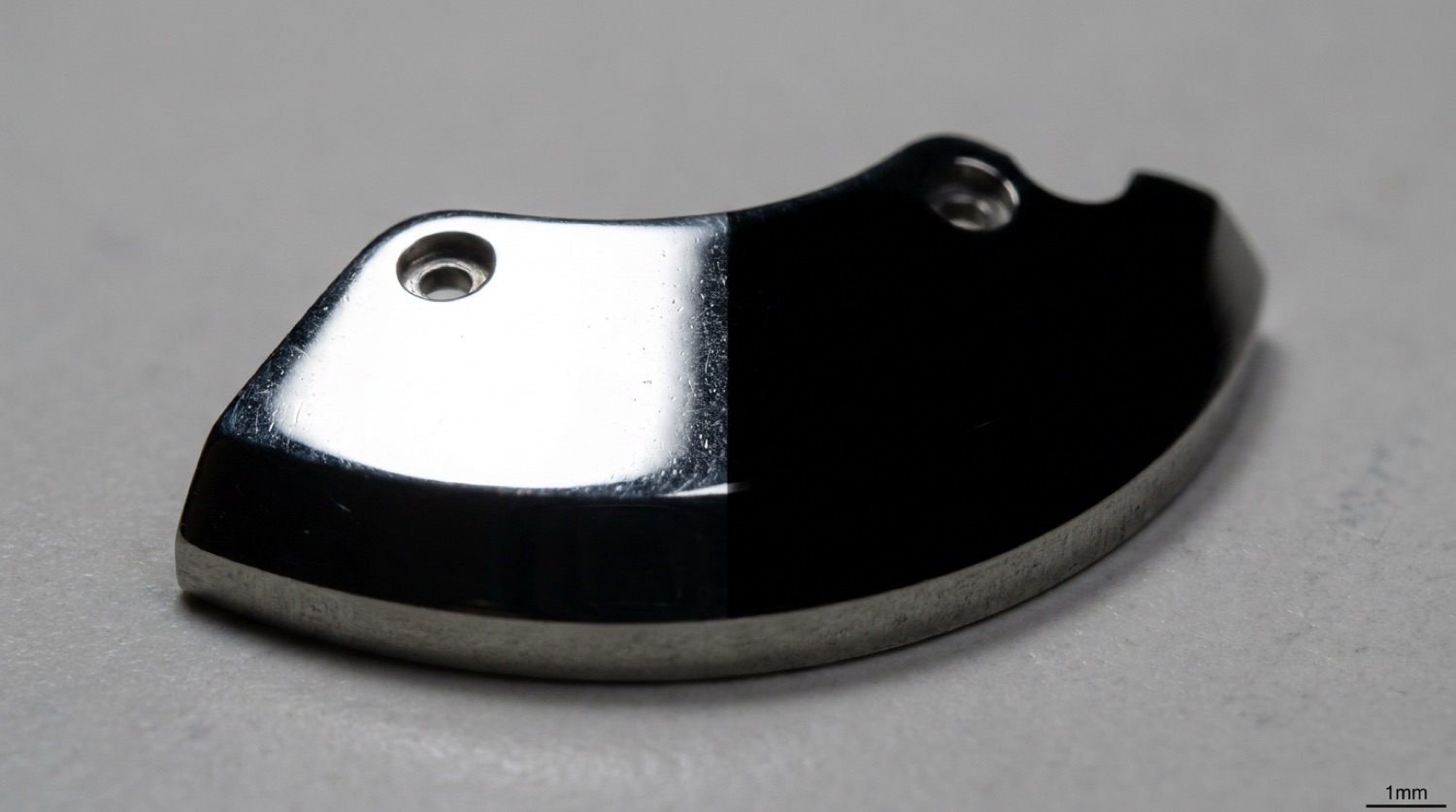
In the twenty-first century, perfection has been commoditized. Advanced multi-axis CNC milling, deep reactive-ion etching (DRIE), and LIGA lithography have made industrialized, sterilized flawlessness cheap and infinitely scalable. Because a machine can effortlessly execute a perfectly uniform curve or a pristine polished surface thousands of times over, mechanical perfection has fundamentally lost its power as a luxury signal.
In response, the most discerning collectors have executed a profound psychological pivot. They no longer seek the cold, frictionless output of a machine; they seek the “Humanity Gap.” They hunt for the microscopic burrs, the slight asymmetries in a hand-engraved balance cock, and the minor irregularities of a hand-cranked guilloché dial.
The Metaphysics of Finishing: From Function to Artistry
To understand this connoisseurship, one must look through the loupe at the language of traditional haute horlogerie. Historically, movement decoration was not born of aesthetic vanity, but of functional necessity. Techniques were developed to remove burrs that could seize delicate gear trains, to trap microscopic dust particles before they migrated into jewel pivots, and to seal raw metals against atmospheric moisture and oxidation. Today, these exact same techniques serve as the definitive canvas for unscalable human artistry.
The discipline is defined by a holy trinity of manual finishes. Anglage (chamfering) is the painstaking process of filing away the sharp, 90-degree machined edge of a brass or German silver bridge to create a perfectly uniform, 45-degree bevel, which is then polished to a flawless mirror shine using diamond paste and the soft pith of local gentian wood. Côtes de Genève (Geneva stripes) are the linear, wave-like patterns applied to bridges and plates. While modern corporate brands frequently use automated machines or lasers to execute these stripes, traditionalists demand the hand-guided, organic rhythm of an abrasive wooden wheel.
Finally, there is Poli Noir (specular or black polish)—the most demanding finishing technique in horology, typically reserved for steel components such as click ratchets and tourbillon bridges. The artisan rubs the component against a perfectly flat zinc plate coated with fine diamantine paste until it achieves absolute optical flatness. From one angle, the component reflects light brilliantly like a mirror; from another, it absorbs all light, appearing deep, pitch black.
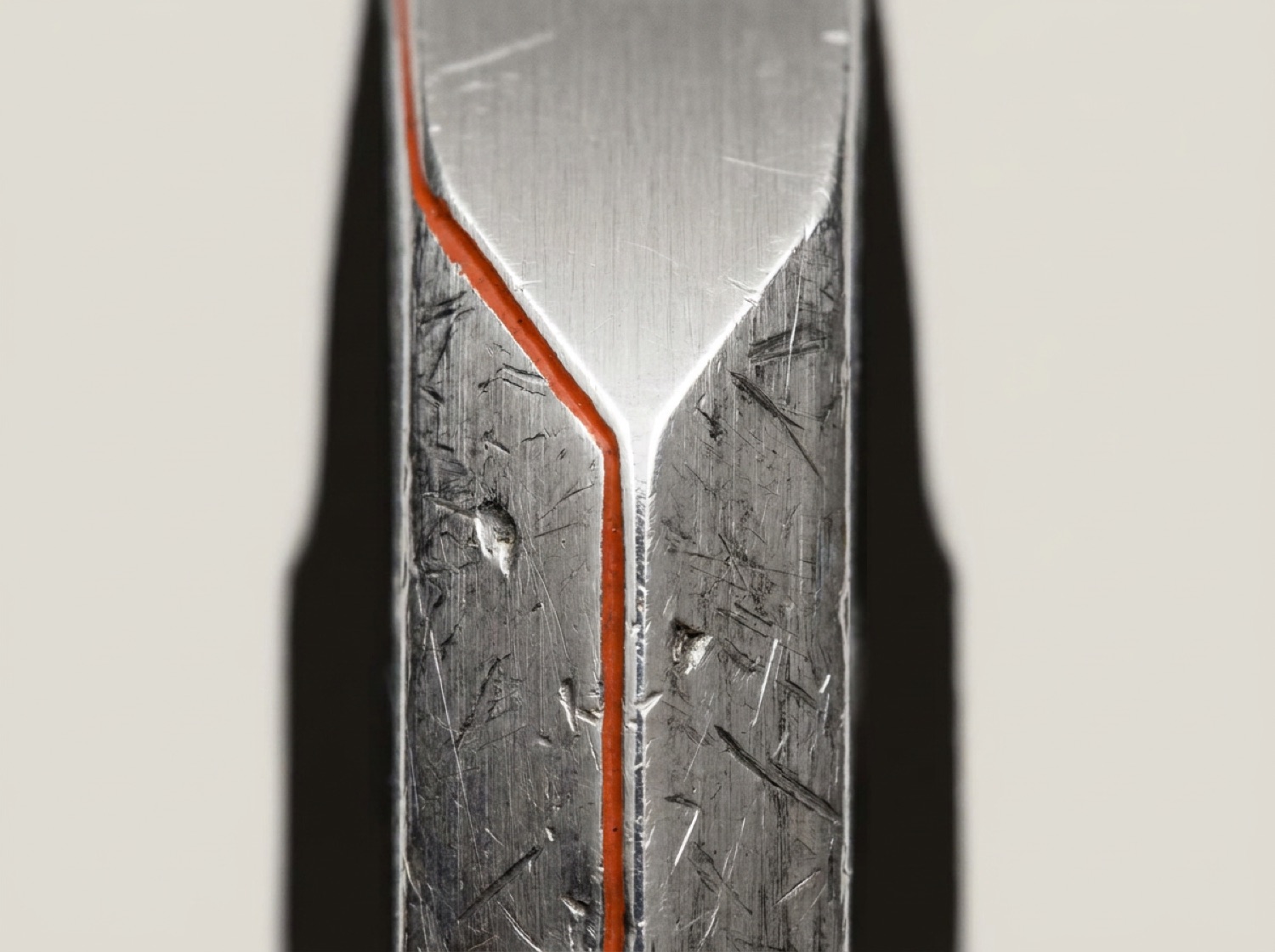
The ultimate battleground between human labor and automated machinery is the angle rentrant (the sharp internal angle). While a modern 5-axis CNC milling machine can effortlessly sweep around the outside of a bridge to pre-cut a rounded outer chamfer, a rotating drill bit is mathematically incapable of cutting a perfectly sharp, 90-degree internal “V” corner—it will always leave a slightly rounded radius. Only a human hand, wielding progressive micro-files and wood pegs, can sharpen and polish a true internal corner. Consequently, the angle rentrant remains the unforgeable, loupe-visible signature of the human hand, acting as the ultimate forensic safeguard against high-fidelity, machine-made counterfeits.
The Living Artist Paradigm
This reverence for the human hand triggered a major structural shift in the market in the early 2020s. Capital permanently pivoted away from “historical brand provenance” toward the “living artisan.” Today, elite independent watchmakers are no longer evaluated as commercial manufacturers, but as contemporary fine artists—akin to Pablo Picasso, Jeff Koons, or Damien Hirst.
Because their annual output is strictly limited by biological capacity rather than corporate quotas, the value of their work resides in the master’s unadulterated, direct physical manipulation of the object. Standard, mass-produced luxury “blue chips”—the steel sports watches of the dominant conglomerates—trade in deep, liquid markets with thousands of active listings, making them highly sensitive to macroeconomic tightening. The independent craft tier operates in a state of absolute, un-manipulable scarcity. By decoupling from commodity trends, these artisans have established highly resilient secondary market price floors, satisfying the ultimate code of inconspicuous consumption unrecognizable to the uninitiated parvenu.
The Sovereign Artisans
The modern independent movement is anchored by a handful of living legends who have weaponized traditional craft against the sterilized scale of the modern industry.
Philippe Dufour (The Sovereign Artisan of Le Solliat)
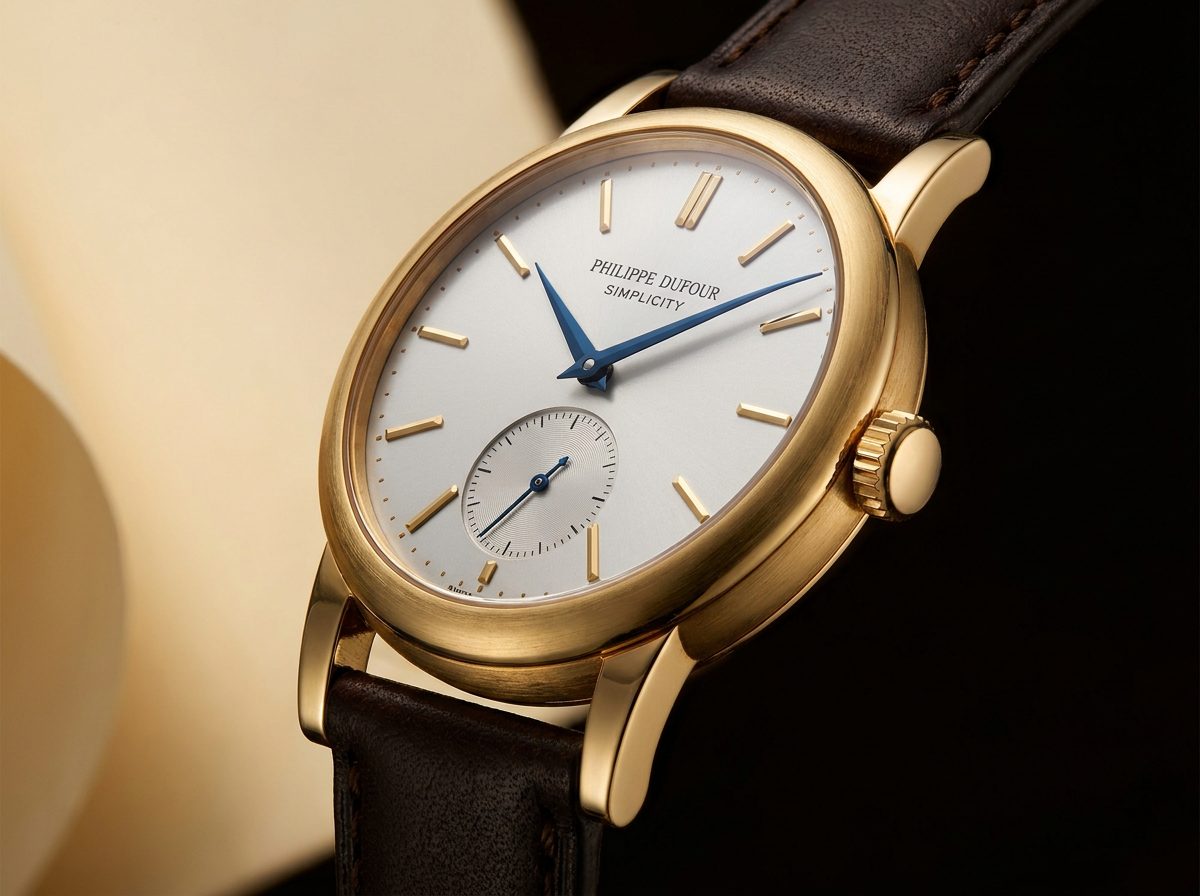
Universally recognized as the spiritual godfather of the modern independent movement, Dufour pioneered complete creative autonomy when he abandoned lucrative corporate contracts in 1989 to work out of a converted schoolhouse in Le Solliat, in the Vallée de Joux. His time-only masterpiece, the Simplicity—strictly limited to roughly 200 units produced between 2000 and 2021, plus a 20-piece 20th-anniversary series in 2020—represents the absolute pinnacle of manual finishing.
Dufour famously spends hours polishing the undersides of bridges and gears that are entirely hidden from the owner’s sight. This “wasteful” labor perfectly echoes evolutionary biologist Amotz Zahavi’s handicap principle: it serves no functional timekeeping purpose, but acts as an honest, un-fakeable testament to uncompromising quality. The market response has been staggering: a Simplicity that retailed in 2000 for $40,000 to $50,000 now consistently commands $800,000 to $1,300,000 at auction.
F.P. Journe (Invenit et Fecit)
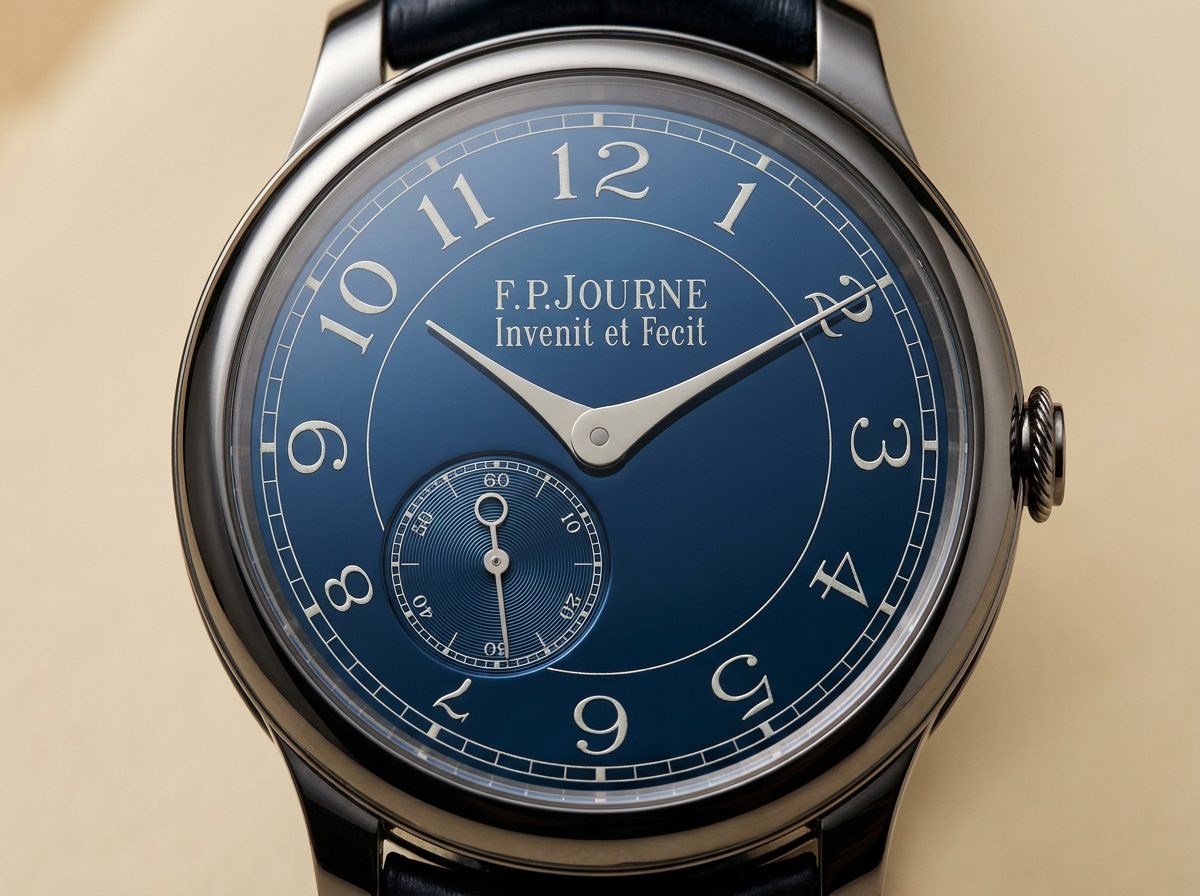
Operating under his uncompromising Latin manifesto, Invenit et Fecit (Invented and Made), François-Paul Journe designs with a strict emphasis on historical purity. His legendary “brass-movement period” (1999–2003/2004) represents his raw, hand-crafted origin. During this early era of financial constraint, Journe executed his movements using untreated brass baseplates and bridges.
Though he transitioned to solid 18k rose gold movements in 2004, those early brass calibers are vastly scarcer and revered by collectors as the purest expression of his art. Today, a gold Tourbillon Souverain trades for $150,000 to $200,000, while its brass-movement predecessor consistently commands $500,000 to over $800,000. This fervent demand for his early, unadulterated work culminated at the Phillips NY XIV auction in June 2026, where a prototype Chronomètre à Résonance ‘Souscription’ No.007 shattered all records, hammering for $13.92 million. It established the all-time record for any independent watchmaker and became the most expensive 21st-century watch ever sold at a commercial auction.
Kari Voutilainen (The Custodian of Môtiers)
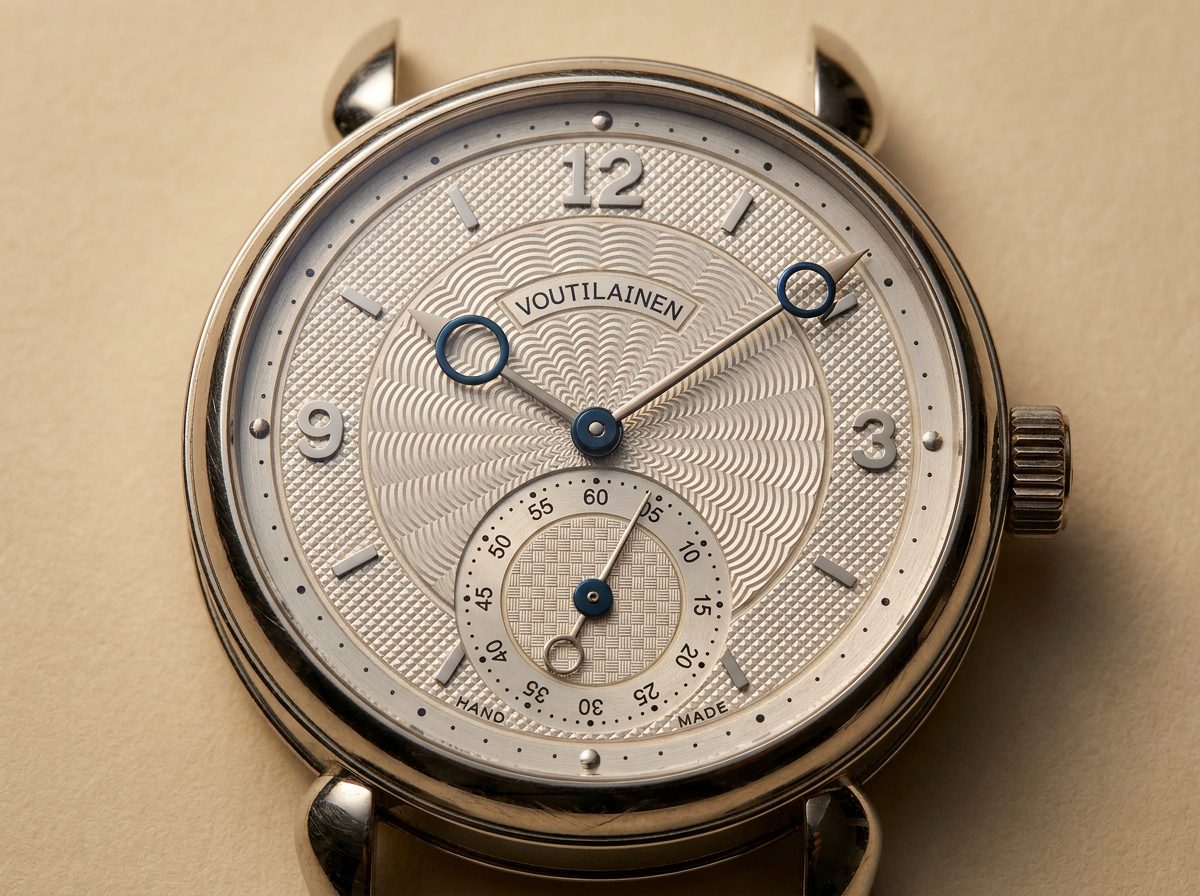
From the Swiss village of Môtiers, Voutilainen explicitly rejects modern horological crutches, refusing to use industrial silicon components. His team of fewer than 20 people hand-forges movements using traditional German silver (maillechort) plates and solid 18k rose gold gear trains hardened via manual rolling (laminage). Voutilainen strictly caps his annual production historically under 60 timepieces (recently drifting slightly to 70 units). His dials are celebrated for their hand-turned engine-cut guilloché patterns, an increasingly rare art form he secured permanently for his atelier through the 2022 acquisition of Brodbeck Guillochage.
Laurent Ferrier (The Neo-Classical Purist)
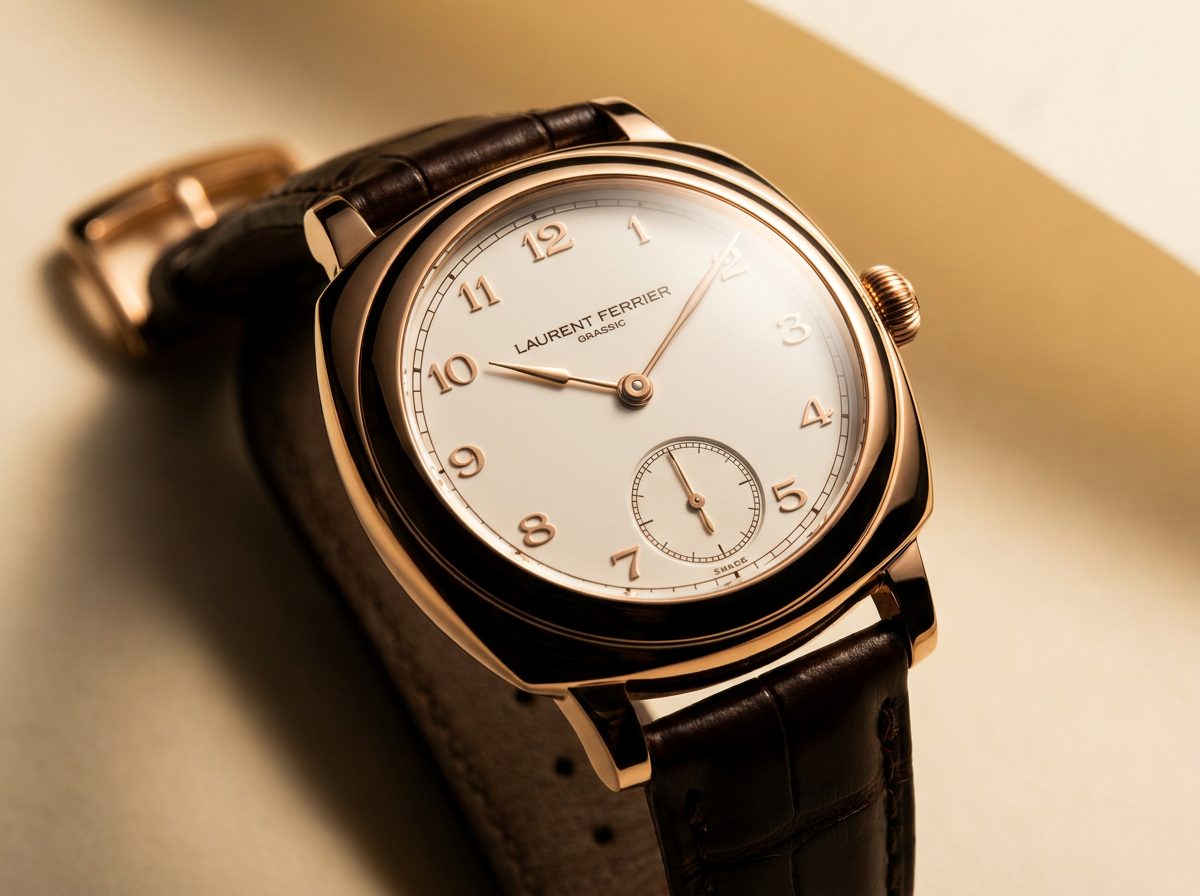
Ferrier’s trajectory is highly anomalous; rather than rebelling in his youth, he spent 37 years at Patek Philippe, eventually serving as Creative Director. His eponymous workshop, launched later in life, serves as the ultimate preservation of classical Genevan traditions. Ferrier rejects automated CNC stamping and industrial escapements, returning to files and wood pegs coated in abrasive paste to manually chamfer sloping angles. His movements are celebrated for their beautiful hand-executed poli spéculaire on blade-style click ratchets and sweeping tourbillon bridges.
Portability and the Wrist Machine
In a world where wealth is increasingly abstract, digitized, and relentlessly tracked by the architecture of modern finance, the mechanical wristwatch offers a profound counter-narrative: it is high-density, sovereign capital that sits directly on the skin.
The Physics of Wearable Capital
The mechanical watch is arguably the most efficient vehicle for portable wealth in existence, concentrating immense economic value into an object that can be stored with minimal logistical friction and transported across international borders entirely decoupled from traditional banking systems.
To understand this efficiency, one must examine the Value-to-Mass (V/M) ratio of a luxury timepiece compared to other tangible assets. Storing $1,000,000 USD in physical gold bullion requires carrying approximately 13 to 15 kilograms (nearly 230 troy ounces) of physical mass.. Physically moving $1,000,000 USD in cash (specifically standard $100 bills) weighs roughly 10 kilograms (22 pounds) and is inconvenient.
In stark contrast, an elite independent horological machine compresses that identical capital value into a total physical mass of under 30 grams (including the strap). It achieves a hyper-compressed capital density that integrates invisibly onto the body. Up to one million dollars in capital can be effortlessly concentrated into a single mechanical watch weighing less than 150 grams.
Frictionless Mobility versus Traditional Assets
The mobility of the wrist machine stands in sharp relief when compared to traditional alternative assets. Real estate is inherently illiquid; it requires complex legal frameworks and, as wealth managers frequently note, “you cannot carry a vineyard in your pocket.”
Classic and luxury cars suffer from punitive, use-based depreciation curves directly linked to accumulated mileage and physical wear. A high-end vehicle typically loses 20 percent to 30 percent of its value immediately upon leaving the dealership, followed by a steady 10 percent to 15 percent annual decline. Furthermore, cars require expensive physical garage storage, insurance, and maintenance, and as the saying goes, “you cannot carry a Ferrari into a bar.” Watches completely invert this trajectory. A mechanical movement does not lose intrinsic value simply because its balance wheel oscillates, and its “mileage” is untrackable and easily reset.
Fine art operates under a highly regulated, mature international framework—most notably the 1970 UNESCO Convention and Council Regulation (EEC) No 3911/92. This system demands strict export licenses for works crossing international borders and requires extensive provenance tracking to counter money laundering.
The Customs Loophole and the Tax Shield
The portability of the watch is protected by international travel guidelines. A wristwatch worn on the body is classified under HS Code Chapter 91 as an untracked “Exempt Personal Effect.” This specific status allows timepieces to easily bypass the mandatory asset declaration forms and border-security thresholds required for loose gemstones, bullion, fine art crates, or monetary instruments exceeding $10,000 USD.
This logistical advantage is compounded by a significant tax asymmetry. Under His Majesty’s Revenue and Customs (HMRC) rules in the UK (TCGA 1992 s45), mechanical watches are technically classified as “machinery” and “wasting assets” because they have moving parts and a predictable useful life of under 50 years—regardless of the fact that a well-maintained vintage watch can easily last centuries.
Consequently, private collectors are currently completely exempt from Capital Gains Tax (CGT) on watch disposals. A collector can purchase a timepiece for £150,000, sell it on the secondary market for £450,000, and pocket the £300,000 margin entirely tax-free. By contrast, fine art is not deemed machinery and is fully subject to CGT once profits exceed standard chattel thresholds.
To the discerning collector and investor, the “little wrist machine” is far more than a masterpiece of micro-engineering or a badge of taste. It is a highly concentrated, wearable, and liquid store of private capital that remains under the absolute, physical sovereignty of its owner.
The Econometric Matrix of Wearable Capital
To systematically evaluate how portability alters the risk-adjusted return profile of high-end horology, wealth managers track the physical and regulatory attributes of watches against competing alternative tangible assets. The matrix below delineates these boundaries, revealing why the top tier of watchmaking functions as an un-registrable safe-haven currency in modern portfolio theory:
Liquidity and the Global Dealer Network
For decades the secondary luxury watch market operated in the shadows, a fragmented and largely analog network of regional hobbyists, localized boutiques, and quiet gentleman’s agreements. That localized trade has now been entirely superseded. The contemporary secondary market has become a highly financialized, globally integrated alternative asset class in which the mechanical timepiece functions as a highly liquid, borderless financial instrument. The collector must understand the architecture of its liquidity.
The “Standing Global Bid” versus Frictional Assets
In the realm of traditional passion assets, transaction cycles are plagued by severe structural friction. The liquidation of fine art, elite real estate, or classic automobiles requires navigating a labyrinth of physical deeds, centralized registries, export licenses, and exorbitant brokerage overhead. Converting a Picasso or a coastal estate into hard fiat currency routinely takes months, if not years, leaving the capital trapped in an illiquid state.
The global watch market bypasses this friction through the phenomenon of the “Standing Global Bid.” Because millions of collectors, investors, and professional dealers are constantly tracking a highly standardized catalog of references through real-time, algorithmic indices such as ChronoPulse or WatchCharts, a watch owner rarely has to search for a buyer. The market is continuously bidding.
The Global Liquidity Infrastructure
This frictionless mobility is underpinned by a massive, digitized infrastructure that standardizes transaction velocity worldwide. The epicenter of this digital exchange is Chrono24. Founded in 2002, the platform has aggregated the world’s inventory into a single, highly visible ledger. Hosting between 540,000 and 560,000 active listings according to 2025 data, Chrono24 captures inventory from roughly 3,000 professional dealers and 45,000 private sellers across more than 150 countries. Generating in excess of 9 million unique visitors per month, the exchange has facilitated the transfer of more than 1.6 million watches, yielding a cumulative transactional volume exceeding €2 billion (approximately $2.2 billion USD).
This digital architecture was further institutionalized in 2024 when Chrono24 integrated the International Watch & Jewelry Guild (IWJG). This strategic merger plugged the digital marketplace directly into an elite, ~8,900-strong global professional dealer network. The consolidation acts as a massive centralized buffer of buy-side liquidity, effectively erasing regional pricing disparities and standardizing global trade.
Secondary Market Velocity (SMV) and the Time-to-Sell
In a fully financialized market, capital efficiency is measured by Secondary Market Velocity (SMV)—the speed and frequency with which a specific reference is traded on the secondary market at or above its original Manufacturer’s Suggested Retail Price (MSRP). Wealth managers and portfolio analysts apply strict mathematical multipliers to timepieces based on their SMV, actively pricing in the premium of liquidity or the penalty of stagnation.
The Cash-Equivalent Benchmark (1.1× Multiplier): Highly coveted, “blue-chip” references—predominantly stainless steel sports models from Rolex, Patek Philippe, and Audemars Piguet—achieve “High Velocity” status. These specific assets can be reliably liquidated into cash within 24 to 48 hours across any global financial hub (from New York to Geneva, Hong Kong to Dubai) without the seller accepting a catastrophic price “haircut.” Under advanced portfolio risk models, the sheer agility of these assets earns them a 1.1× valuation multiplier.
The Illiquidity Penalty (0.8× Multiplier): Conversely, slower-moving, non-hype references that sit on the market for more than three months suffer a distinct velocity drag, penalizing the asset with a 0.8× multiplier.
Wrist Cash: The Universal Portability of Capital
This transactional thickness creates a profound financial premium. Because highly allocated, scarce primary units (such as a stainless steel Rolex Daytona or GMT-Master II) are essentially “pre-sold” the moment they enter the secondary market, securing an allocation at the retail list price represents an immediate, risk-free capital gain.
The psychological comfort of this liquidity cannot be overstated. A collector is not merely wearing a mechanical marvel; they are wearing globally recognized bearer bonds. Unlike real estate tied to a specific jurisdiction or fine art trapped in a freeport vault, the wrist machine offers absolute logistical sovereignty. It is a decentralized, off-ledger store of wealth that remains perpetually liquid. Summarizing the ultimate, quiet power of the global dealer network, Bolt says:
“In today’s world of ever-increasing dealers all over the planet, you can cash it up pretty much whenever you want, so it’s just a little nest egg that you’ve got sitting there always.”
Store of Value versus Gold and the Nest Egg
In the classical orthodoxy of wealth management, the preservation of purchasing power across multi-generational time horizons has systematically relied on the inert permanence of physical gold bullion. Under this asset-preservation model, gold serves as the baseline shelter against fiat currency debasement, institutional insolvency, and systemic macroeconomic shocks. Yet long-term empirical modeling completed over a full two-decade window from 1999 to 2020 has radically altered the topography of alternative tangible assets. By analyzing a macro-dataset comprising more than 60,000 verified global auction results, financial researchers confirmed that collectible luxury watches achieved an annualized real return of 5.5 percent, translating to a 7.7 percent nominal return. This historical trajectory allowed elite horological assets to demonstrably outpace traditional equities as measured by the S&P 500, fine art, and classic cars over the same timeline.
Despite this aggressive growth curve, the structural hierarchy of risk-adjusted tangible assets remains firmly governed by the material reality of market volatility. Collectible watches generate nominal Sharpe ratios that are historically inferior only to those of physical gold bullion. This mathematical relationship confirms that gold remains the steadier, lower-drawdown tangible asset for long-run capital preservation, even as specific horological references unlock significantly higher capitalization ceilings.
This macro-economic divergence was vividly illustrated during the explosive market run leading to late January 2026, where the physics of raw materials collided directly with the mechanics of brand equity. Physical gold bullion rose from an average of $1,078 per troy ounce in January 2016 to unprecedented historical records scaling past $5,100 per troy ounce by early 2026—a near-fourfold appreciation over the decade. This monumental safe-haven surge was powered by aggressive capital flight: after a +25.5 percent advance across 2024, gold entered a parabolic melt-up through 2025 and into early 2026, more than doubling off its post-pandemic base.
Over this exact same trailing ten-year window, the institutional benchmark for tracking alternative passion investments—the Knight Frank Luxury Investment Index watch component—recorded an aggregate trailing valuation increase of +125.1 percent, with specific alternative KFLII ten-year matrices capping out between +138 percent and +147 percent. Consequently, physical gold bullion significantly out-returned the diversified watch index over this specific decade, serving as a reminder that when global monetary systems fracture, raw atomic element storage attracts massive, low-velocity institutional capital.
Furthermore, the downside protection profile of the horological market demonstrates a far higher correlation to traditional equity markets than the absolute independence of precious metals. During the post-COVID macroeconomic contraction extending from April 2022 to October 2023, the open-market secondary trade experienced an intense cyclical correction, causing the Bloomberg Subdial Watch Index to collapse by approximately 42 percent. Over this identical macro-window, physical gold displayed its classic counter-cyclical stability, enduring a maximum intra-year drawdown of merely ~21 percent. Gold peaked at approximately $2,051 per troy ounce on March 8, 2022, found an absolute price floor at $1,622 per troy ounce on September 26, 2022, and rapidly recovered to finish the annual cycle flat before embarking on its record-setting breakout.
Pairwise asset-class standard deviations further codify this structural variance. While the standalone volatility of the aggregate watch market is remarkably low at 3.90 percent over prolonged smoothed cycles—solidifying its role as a premier portfolio diversifier—the annualized volatility of gold sits at 13.76 percent. This proves that while the watch market provides a highly resilient, non-correlated buffer for traditional portfolios, individual horological references carry acute short-term drawdown and multi-year recovery risks that the inert gold bar does not.
To navigate this terrain, the Tier 1 collector rejects the simplistic generalization that “all luxury watches appreciate.” The market behaves with extreme, K-shaped polarization. While the 2023–2024 global luxury drawdown forced rare whisky down by -9 percent and fine art to contract by a devastating -18.3 percent, the KFLII watch sub-index demonstrated remarkable institutional resilience, print-verified at +5 percent in 2023 and +1.7 percent in 2024. By early 2026, the watch component consolidated with a selective +5.1 percent annual return. Crucially, this growth was not distributed evenly across the trade; it was entirely concentrated within iconic, historically significant references that command the deepest cultural resonance and the tightest structural supply limits.
Regulatory Asymmetries and Border Optimization
The operational superiority of the mechanical watch as a wealth preservation tool is realized at the physical boundary of state jurisdiction. Physical gold bullion is an anonymous, cross-border token of absolute liquidity, yet it remains profoundly exposed to the vulnerabilities of bulk mass and high visual profiling. Transporting $1,000,000 USD in raw gold bullion requires the physical transit of approximately 7.14 kilograms (or 229.6 troy ounces) of dense material. A metallic footprint of this scale cannot be casually hidden inside ordinary garments, rendering the courier immediately vulnerable to interception, physical theft, and targeted search routines.
Under established global travel guidelines, a wristwatch worn directly on the body is classified under Harmonized System (HS) Code Chapter 91 as an untracked, ordinary “Exempt Personal Effect.” Unlike fine art, exotic vehicles, or real estate, there is no mandatory, state-sanctioned centralized ownership registry for mechanical timepieces. While physical gold coins and bullion bars are blocked by explicit reporting thresholds—such as the United States FinCEN Form 105 (CMIR) or European Union Regulation 2018/1672, which mandate the strict declaration of physical gold of ≥90 percent purity for coins and ≥99.5 percent for bars exceeding €10,000 in value—a multi-million-dollar timepiece can be worn through an international customs gate completely unremarked, operating in a state of absolute regulatory invisibility.
This regulatory asymmetry extends into the domain of taxation. In the United Kingdom, Section 45 of the Taxation of Chargeable Gains Act 1992 treats wasting assets—defined as assets with a predictable life of 50 years or less—as exempt from capital gains tax. Mechanical watches fall squarely within this statutory architecture. The 0 percent CGT application on disposal creates a structural tax shield unavailable to gold bullion or other non-wasting tangible assets, allowing the collector to realize gains without the frictional drag of tax leakage that erodes net proceeds on traditional commodities.
Non-Dilutive Liquidity and the Collateral Grid
Beyond outright sale, the high-end mechanical wristwatch functions as an elite vehicle for collateralized liquidity that structurally outperforms traditional commodities. Institutional and private banking desks now maintain dedicated watch-backed credit lines, frequently benchmarked to SOFR or equivalent floating rates. These facilities allow the collector to unlock capital against the asset without triggering a public sale that would flood the secondary market and compress realized values. Auction houses have similarly expanded capacity in this arena, offering advance lines against future hammer prices with terms that preserve the owner’s ability to retain the piece through the credit cycle.
The tiered architecture of this credit infrastructure ranges from conservative private-banking facilities secured against blue-chip stainless-steel sports references to more aggressive lines extended against independent atelier pieces whose scarcity commands deeper institutional confidence. In each case the watch serves as a non-dilutive store of value: the collector retains physical custody and the psychological dividend of daily wear while accessing liquidity that would otherwise require the outright liquidation of less portable assets.

In an era of expanding fiscal surveillance and digital transparency, the wrist machine offers a form of wealth storage that gold bullion cannot match: it is portable without bulk, recognizable without registration, and liquid without forced sale. The nest egg it represents is not inert; it travels with the owner, participates in daily life, and retains the capacity to generate both emotional return and financial optionality across the full arc of a collector’s life.
The Ethics of Condition and Wear
In the contemporary global horological economy, an absolute paradigm shift has permanently decoupled alternative asset value from chronological age and placed an exponential financial premium on factory-original preservation. For the uninitiated speculator entering the market in 2026, the instinctive drive is to pursue flawless surface aesthetics—to mistake an unblemished, freshly buffed profile for investment-grade quality. This is a structural error born of cross-asset misalignment. The “preservation class” dictates secondary-market liquidity and terminal valuations through a strict, uncompromising set of condition rules that prize the historical integrity of the object above all else.
A mechanical watch dial or case is not a renewable consumer canvas; it is a finite, non-renewable pool of historical data. The thin disc of brass coated with paint, lacquer, or organic luminous material that forms the watch’s face naturally degrades over decades, documenting a singular trajectory through time and space. Every micron of steel or gold permanently stripped by an abrasive polishing wheel represents an irreversible erasure of that physical data. To understand haute horlogerie as an alternative asset class, one must embrace a profound paradox: in this market, honest physical trauma is highly tolerated, while the cosmetic sanitization of that trauma is a catastrophic wealth-destroyer.
The Economic Calculus of Horological Condition
The secondary market enforces a ruthless hierarchy of condition rules that can be mathematically codified with precision. When a watch remains in untouched, unpolished condition, it serves as a certificate of structural and geometric integrity, verifying that the case retains the exact lines, sharp chamfers, and crisp satin brushing originally applied by hand or machine at the factory gates. This unpolished status commands a rigid +30 percent to +50 percent premium on the open market over a standardized counterpart.
Conversely, surface markings accrued through active wear incur a negligible deduction of only -0 percent to -5 percent. The penalty for refusing to allow an object its history is severe. Polishing is inherently a subtractive refinishing process. By removing microscopic layers of native factory metal, the polishing wheel deforms the case architecture, softening razor-sharp 45-degree bevels, rounding pristine lug profiles, and creating asymmetrical geometries. A vintage timepiece burdened by heavy polishing or reshaped lugs faces a punitive -20 percent to -40 percent valuation deduction.
An even more devastating liquidation event occurs when an owner allows an authorized service center to substitute aging components. Replacing an original, naturally degrading radium or tritium dial with a modern, manufacturer-approved service dial results in an immediate -30 percent to -60 percent valuation drop. In high-value sports references, this component replacement is frequently penalized as a -50 percent to -80 percent “toxic provenance” discount. Because up to 90 percent of a vintage watch’s equity resides in the few square centimeters of its printed dial, replacing an organic, aged face with a sterile, modern Luminova equivalent permanently destroys its chronological virginity and liquid market appeal.
The Automotive Logic Fallacy and the Preservation Moat
The foundational mistake made by cross-asset investors is defined as the “Automotive Logic Fallacy.”
A mechanical watch operates in a highly protected, micro-mechanical environment on the human wrist. Its internal mileage is completely protected from major environmental hazards, and its main caliber is easily serviced, regulated, and reset with negligible impact on its financial value. Therefore, horological equity is almost entirely sensitive to the preservation of its external, factory-original case and dial configuration. A “better-than-new” cosmetic restoration acts as an immediate value-destroyer rather than an upgrade.
Under Walter Benjamin’s cultural framework, an original object’s real value is derived from its “Aura”—its unique historical presence and singular trajectory through time and space. In the horological ecosystem, authentic patina is the physical inscription of this aura. The chemical mutation of black paint into chocolate-brown “tropical” tones due to intentional UV and moisture exposure, the fading of an aluminum insert into a muted “ghost” bezel, and the warm amber decay of tritium luminous plots are celebrated as uncopyable historical fingerprints.
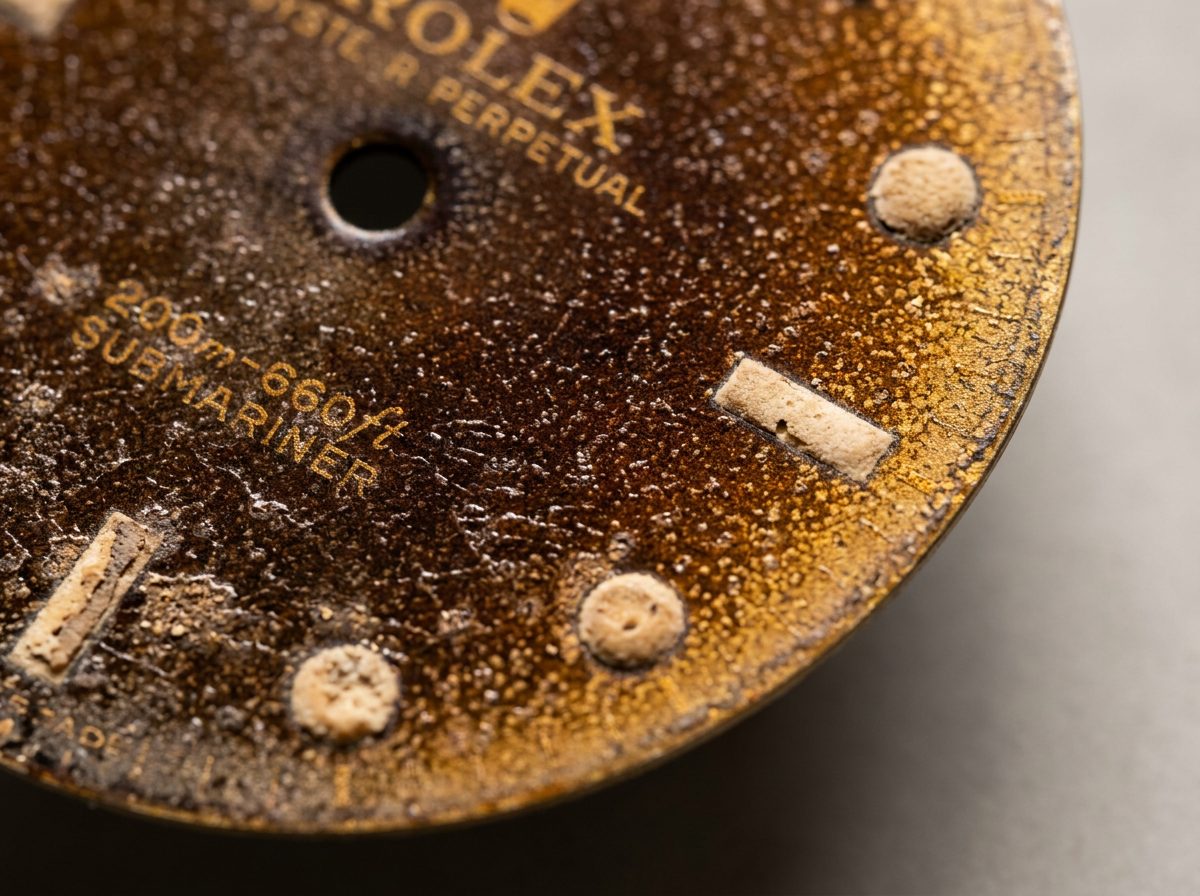
The profound commercial reality of this preservation philosophy is illustrated by a key treasure from Bolt’s personal collection: a 1950s stainless steel Patek Philippe Reference 1463 screw-back chronograph. Purchased by Bolt in his third year of dealing for £15,000 this steel chronograph features the rarest known dial configuration and has been preserved in its completely unpolished state. The piece is visually far from perfect. It exists as an object that is “absolutely battered, with dings, dents and marks all over the case.” Yet, because the watch’s case geometry has never been mathematically compromised by a subtractive polishing wheel, and its pristine original dial remains perfectly preserved, it commands a market valuation of £750,000 today.
The transaction data further proves that this premium is closely linked to information risk reduction. Pledging a complete “Full Set”—comprising the original point-of-sale boxes, hangtags, and chronometer warranty cards—reduces the severe informational asymmetries that plague the secondary trade. A complete Full Set routinely commands a 10 percent to 25 percent premium (escalating to a 25 percent to 35 percent tier for rare vintage references) over a “naked” watch. Furthermore, Full Sets close transactions 13 percent faster on average, translating directly into a substantial recovery of capital velocity for the fund or private allocator.
Conversely, the complete loss of these papers results in an immediate -10 percent to -25 percent penalty. For the serious collector, a watch that has traveled through time with its scars intact and its paper trail unbroken is not an old instrument; it is a forensically secure financial redoubt.